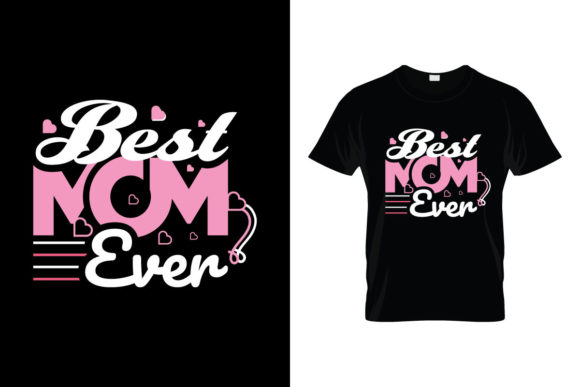
Best Mom Ever T-Shirt Design
A Designer’s First Look: Warm, Clear, and Ready for Real Stitching
When I opened T Shirt Design Best Mom Ever, my first thought wasn’t “cute” — it was “usable.” That matters. As someone who’s stitched hundreds of personalized gifts and small-batch boutique items, I know how often a design looks perfect on screen but falls apart under needle and thread. This one lands gently: clean lines, balanced spacing, and a friendly, confident tone that reads well at 3–4 inches wide — the sweet spot for tote bags, sweatshirt fronts, and baby onesies. It doesn’t shout. It smiles — and that’s exactly what makes it work for real embroidery projects.
Where It Shines: From Nursery Decor to Boutique Merchandise
I recently used T Shirt Design Best Mom Ever as the centerpiece for a set of embroidered linen tea towels — part of a Mother’s Day collection for my local craft shop. The layout held up beautifully in satin stitch across the textured weave, and the letterforms stayed legible without oversaturation. That same design translated cleanly to a cotton-blend apron (using light tear-away stabilizer) and a lightweight denim tote bag (with medium cut-away). No pixelation, no jagged edges — just crisp, confident stitching.
It’s also proven reliable for baby embroidery: stitched onto a 100% cotton receiving blanket using soft pastel threads, the design read clearly even at 2.5 inches wide. For Etsy sellers, this is gold — it fits seamlessly into printable mockups, pairs naturally with neutral backgrounds, and supports consistent branding across listings. As a machine embroidery design, it avoids over-detailing that would bog down fill stitch density or cause thread breaks on slower home machines.
Where to Pause — Not Every Surface Is Equal
That said, T Shirt Design Best Mom Ever isn’t magic. On highly textured fabrics like terry cloth or thick fleece, I recommend testing stitch density first — dense satin stitch can flatten too much and lose definition. On stretchy knits (think lightweight t-shirts or ribbed baby bodysuits), use a firm cut-away stabilizer and consider reducing stitch count slightly in the letter interiors if your machine allows. And while the design scales well, avoid shrinking it below 2 inches: the “Ever” tail curls slightly, and tiny curves like that need breathing room to stay legible in running stitch or outline work.
Curved surfaces — like the front of a structured cap — require extra attention. The shape works best when centered and not wrapped too tightly around a seam. Likewise, dark fabric demands careful thread color contrast; I tested it in charcoal grey with ivory thread and found the readability held — but only after confirming the design wasn’t relying on subtle drop shadows or low-contrast gradients (it doesn’t).
What It Adds to Your Finished Product
This isn’t just decoration — it’s emotional shorthand. Customers recognize “Best Mom Ever” instantly, and that recognition builds trust. When stitched cleanly onto a handmade pillow cover or embroidered patch, it elevates perceived value without demanding premium pricing. For craft businesses, that balance is rare: warm sentiment + professional execution = repeat buyers and word-of-mouth referrals.
Visually, the design supports brand consistency. Its proportions and weight sit comfortably alongside other modern script-based embroidery files — no awkward scaling needed when bundling it with coordinating designs like “World’s Okayest Dad” or floral accents. And because it’s delivered as a high-resolution graphic (300 DPI, per the listing), it holds up in digital previews, social media banners, and print templates — making it useful beyond the hoop.
Practical Notes Every Embroidery Designer Should Check
- Test before committing: Run a sample on scrap fabric matching your final product’s weight and texture — especially for layered garments or curved items.
- Stabilizer matters: Light to medium cut-away works best for most apparel; tear-away suffices for stable linens and cottons.
- Thread contrast is non-negotiable: View your mockup in black-and-white mode — if letters blur together, adjust thread hue or background fabric choice.
- Hoop size isn’t implied: Since hoop compatibility isn’t listed, confirm the design fits your standard hoop before digitizing or purchasing additional files.
- Licensing clarity is key: The listing says it can be used on mugs, bags, and cards — but verify commercial rights before selling finished embroidered patches or digital embroidery files.
- Small details hold up — mostly: The subtle curve in the “E” and “r” of “Ever” stays clean at standard sizes, but inspect corners closely when resizing for caps or baby hats.
Final Thought: A Reliable, Human-Centered Design Asset
T Shirt Design Best Mom Ever won’t win awards for avant-garde typography — and it shouldn’t. Its strength is in quiet reliability. It stitches cleanly, scales predictably, and carries warmth without cliché. Whether you’re an Etsy seller building a Mother’s Day bundle, a small shop owner curating nursery decor, or a hobbyist stitching personalized gifts for friends, this design earns its place in your embroidery project queue — not because it’s flashy, but because it delivers.
As a graphics file in the Print Templates category, it bridges digital and physical beautifully: sharp enough for crisp iron-on transfers, simple enough for clean satin-stitch execution, and versatile enough to support both personal keepsakes and commercial embroidery runs. Just remember — every great embroidered patch, tote bag design, or sweatshirt embroidery starts with intention. And this one? It begins with respect for the craft, the customer, and the mom who deserves more than a placeholder.